


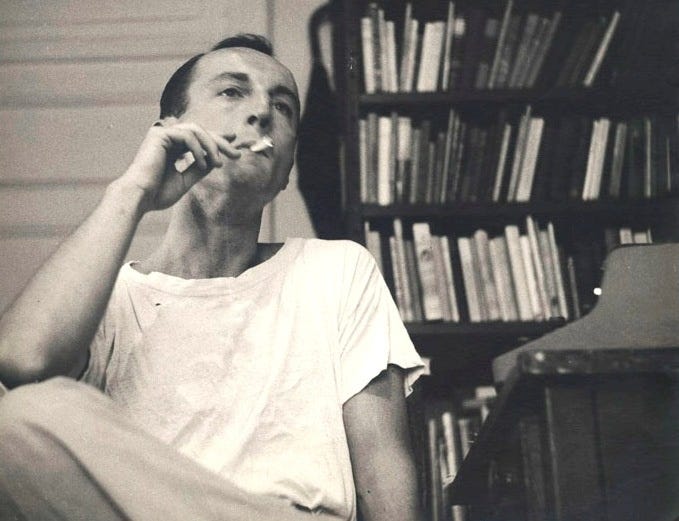
Author’s Note: The Poetry Postmortem is where I take a poem I or someone else wrote and I discuss it in a non-workshop way. I am of the opinion that academics and critics have a tendency to suck the life out of poetry. They talk of “critical eyes”, but they are blind to the heart of a poem.
Frank O’Hara is a name on many lips. I first picked up his Lunch Poems when I was in New York back in 2015. O’Hara sadly died when he was just forty years old when a jeep struck him on Fire Island.
Most famously known for his poem ‘Having a Coke with You’, Frank O’Hara was part of the New York School of Poetry. While his time on this plane was tragically cut short, Frank O’Hara certainly made his mark. One of his poems was even used in an episode of Mad Men.
Today, we are going to be looking at his poem, Present.
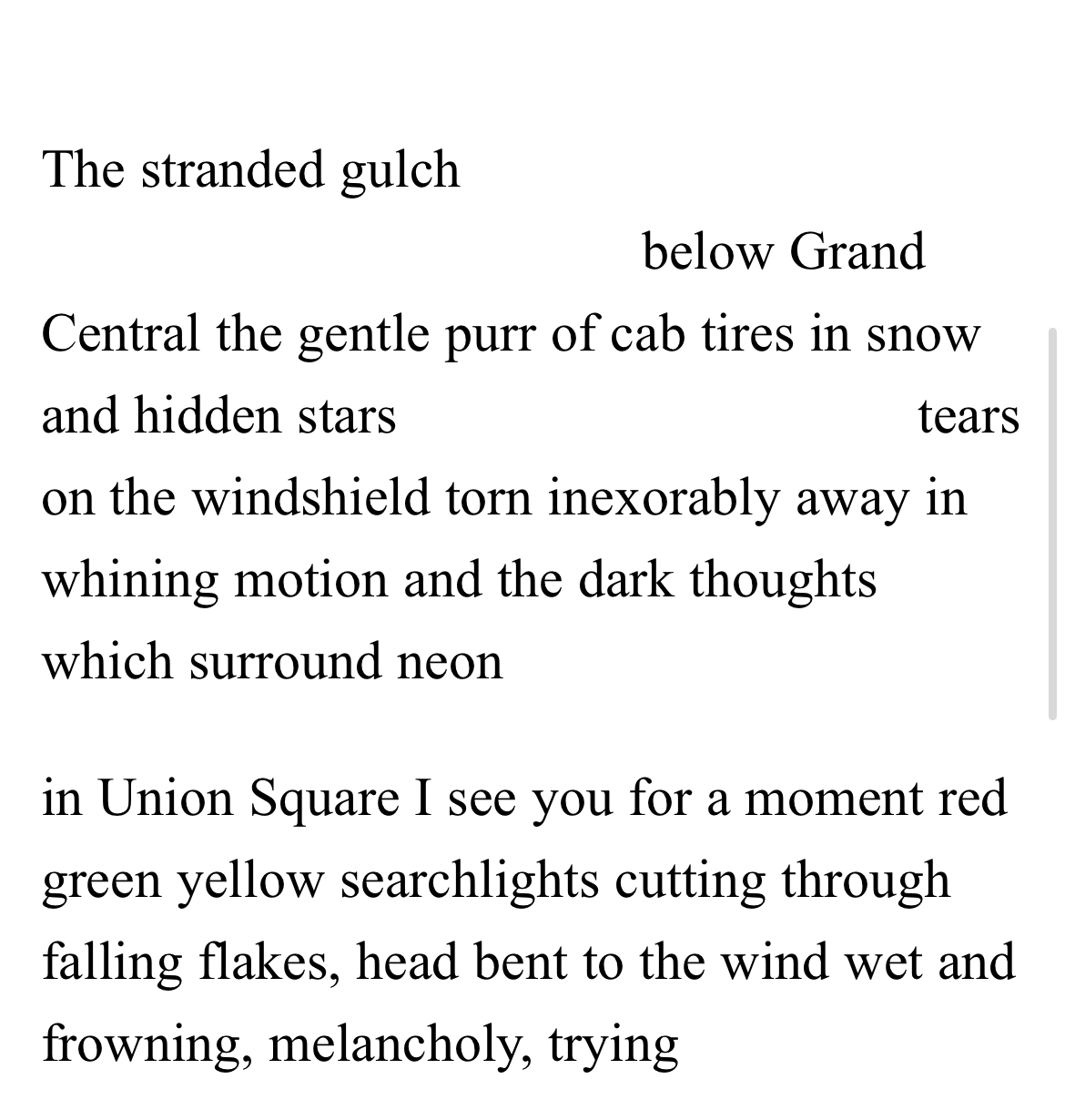
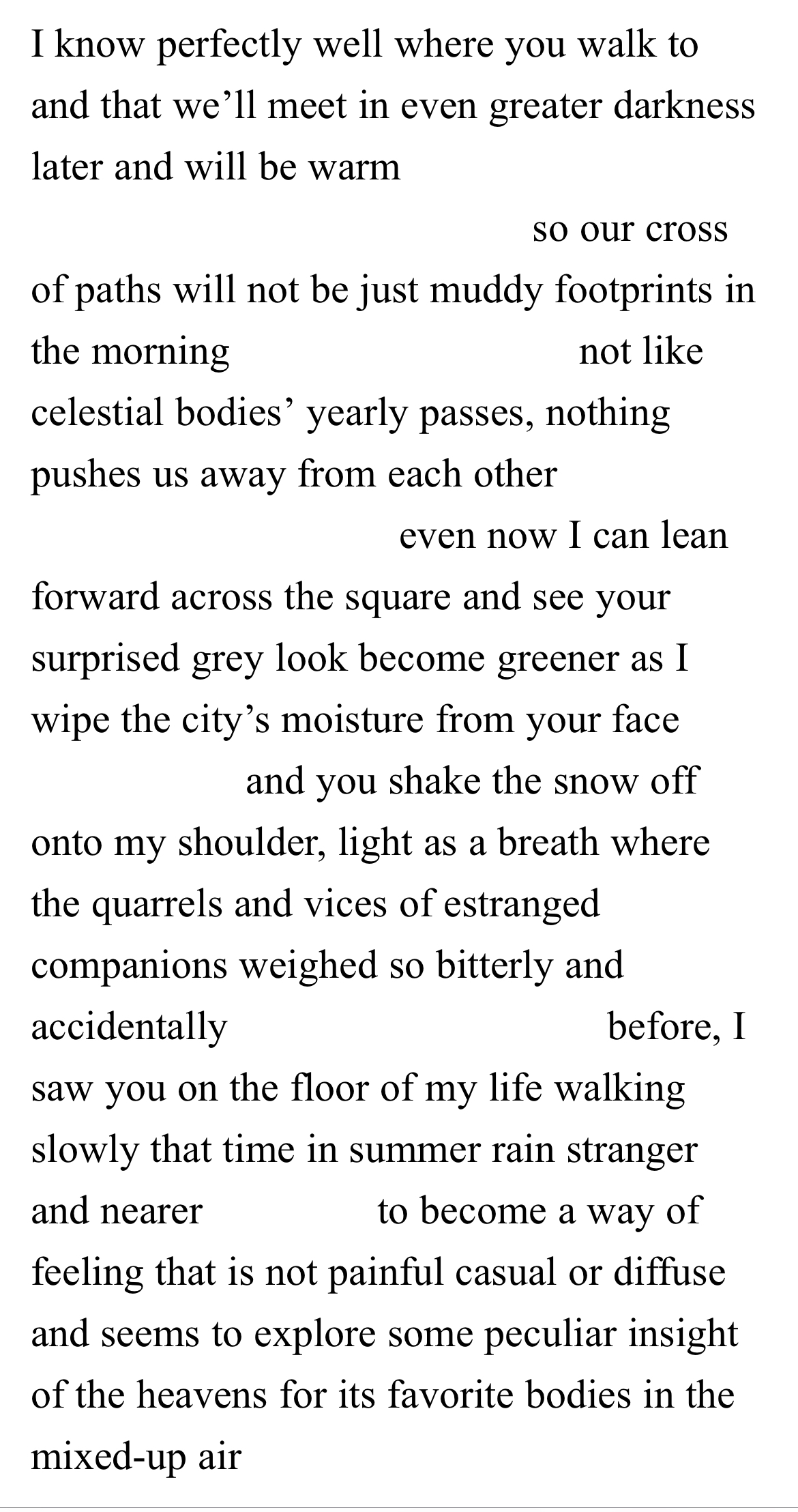
The poem itself is scattered across the page. There are no clear stanzas, nor are there clear endings to each line. You can kind of guess where the next sentence begins, but this is quite the chaotic set-up for a poem.
I completely adore the first line. “The stranded gulch below Grand Central” is such an unusual turn of phrase, but it is fairly effective at conjuring an image. From the very first line, we are aware of the setting. We understand where the speaker is coming from.
Now, in this poem, O’Hara frequently refers to the weather in the scenes he’s describing with “snow,” “city’s moisture,” and “flakes”. Usually, when a poet utilises the senses, it brings the reader into the poem a lot easier. Most of us know what rain feels like, so we can empathise with the speaker.
Regarding the enjambment used, O’Hara uses white space to achieve this seamless transition. There are no pauses for breath in this poem; the feverish pace conveys the passion of the speaker. This is shown in the line, “…so our cross of paths will not just be muddy footprints in the morning.”
The poem goes on to use oxymora such as “gentle” being followed by “dark”. This opposition adds to the sprawling visuals we are being provided. Staying on the language, while there are more advanced words in this particular piece, O’Hara is known for his simplicity. He gives life to the ordinary details, thus personifying them.
Frank O’Hara was a gay man, and I believe this poem was potentially inspired by Vincent de Paul Warren, his long term partner. Many of his poems were inspired by his partner, such as the poem I mentioned at the beginning, Having a Coke With You. As I always say, if you really want to understand a poem to its core, look to the author.
‘Present’ is a free verse poem. This gives the language room to move and transform itself into something entirely different. While form can sometimes be useful, being able to go wild really takes a load off your mind. Form can be quite restrictive, so you aren’t always able to say what you want to within the confines of a Sonnet or a Villanelle.
Concluding, Frank O’Hara’s ‘Present’ poem is filled with striking imagery that conjures various imagery. It is full of passion and a clear love for the subject of the poem. O’Hara really made his mark on the poetry world in the short time he was alive.